


Picture this: my very first attempt at yeast dough, a memory I’d rather erase from my mind. It was a complete flop—a rock-hard, dense blob that had nothing in common with the soft, fluffy bread I’d dreamed of baking. Back then, yeast dough problems felt insurmountable, but Dr. Oetker’s Yeast Guarantee came to my rescue, teaching me the essentials and turning my failures into triumphs. Today,
I’m confidently tackling yeast dough problems on my blog, MyGermanBakery.com, where I share authentic German baking recipes. I’ve even mastered tricks like using cold water for a slow fermentation process—perfect for pizza dough—to deepen flavors and improve texture. Whether you’re facing yeast dough problems with soft German pretzels, airy dinner rolls, or a chewy pizza crust, I’m here to guide you through the challenges with practical, battle-tested solutions.
Welcome to MyGermanBakery.com, your ultimate destination for authentic German baking recipes! In this extensive blog post, I’ll dive deep into the most frequent yeast dough problems, explain what to keep in mind when using fresh yeast and dry yeast, and offer detailed fixes to ensure your dough comes out perfect every time. My mission is to empower you with expert tips and techniques to overcome yeast dough problems, no matter your experience level. From dough that won’t rise to sticky disasters and unexpected flavors, I’ve faced—and solved—these yeast dough problems time and again. Let’s embark on this yeast dough journey together and unlock the secrets to baking perfection!
What is yeast dough and why is it so special?
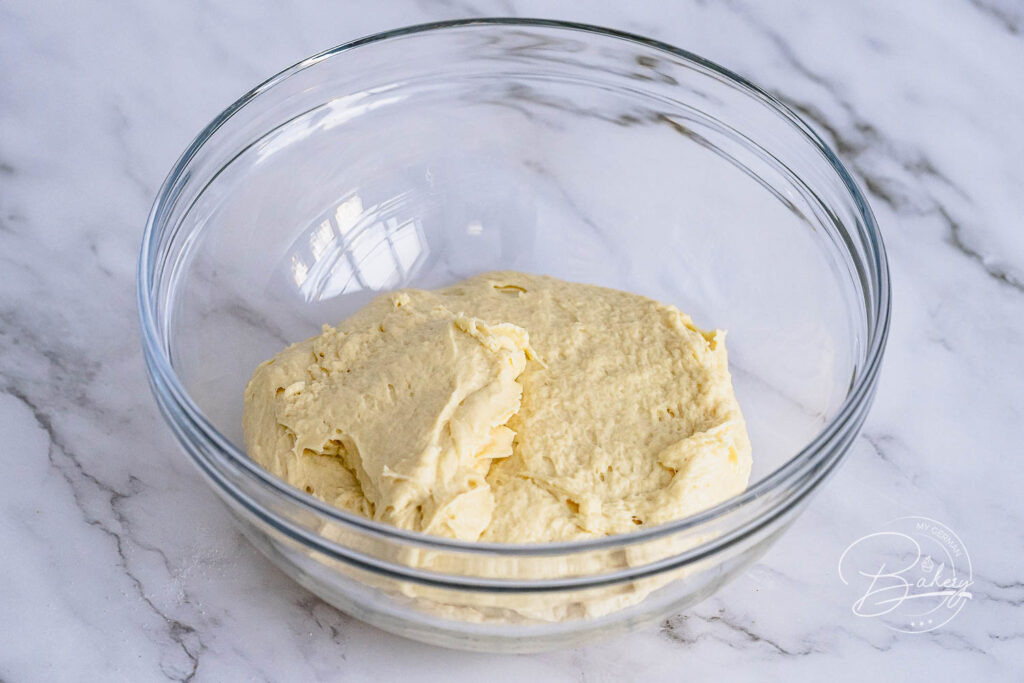
Yeast dough is the heart of so many cherished baked goods, from traditional German pretzels to fluffy cinnamon rolls, crusty dinner rolls, and chewy pizza crusts. It’s crafted from simple ingredients—flour, water, yeast, salt, and often a dash of sugar or fat. The magic lies in the yeast, which ferments and releases carbon dioxide, giving the dough its iconic rise and light, airy texture. But yeast dough problems can arise because yeast is finicky—it’s a living organism in fresh yeast or a dehydrated agent in dry yeast, and it thrives only under the right conditions.
On MyGermanBakery.com, I share a collection of easy yeast dough recipes that bring the flavors of Germany to your kitchen. Before we dive into those recipes, let’s address the yeast dough problems that can trip you up. Whether you’re a fan of fresh yeast or prefer dry yeast, understanding the basics is key to avoiding these yeast dough problems and achieving bakery-quality results every time.
Fresh yeast vs. dry yeast: What I’ve learned to watch out for
Before we tackle yeast dough problems head-on, let me walk you through the differences between fresh yeast and dry yeast and share the lessons I’ve learned about handling each to prevent yeast dough problems.
Fresh yeast: My traditional choice
- What is fresh yeast? Fresh yeast, also known as baker’s yeast or cake yeast, comes in small, moist blocks packed with live yeast cells. I love its robust, authentic flavor, which shines in recipes on MyGermanBakery.com and helps avoid yeast dough problems related to taste.
- Storage: I store fresh yeast in the fridge, where it stays good for about 2–3 weeks. I always check the expiration date to dodge yeast dough problems from inactive yeast!
- How to use it: I dissolve fresh yeast in lukewarm liquid—around 85–95°F (30–35°C)—often with a pinch of sugar to kickstart fermentation. Too-hot liquid (above 104°F/40°C) kills the yeast, a common cause of yeast dough problems.
- Advantages: Richer, more complex flavor; faster fermentation process.
- Disadvantages: Shorter shelf life; more sensitive to heat and cold.
Dry yeast: My convenient go-to
- What is dry yeast? Dry yeast, including active dry yeast and instant yeast, is dehydrated and sold in packets. It’s my pick for convenience and storage, reducing yeast dough problems from spoilage.
- Storage: I keep dry yeast at room temperature in a dry, dark spot, where it lasts for months or years.
- How to use it: I mix instant yeast straight into the flour, while I activate active dry yeast in lukewarm liquid first. It’s forgiving and helps prevent yeast dough problems for beginners.
- Advantages: Long shelf life; easy to store and use.
- Disadvantages: Slightly less intense flavor; can ferment slower than fresh yeast.
My tip from MyGermanBakery.com: If you’re unsure which yeast to use to avoid yeast dough problems, try both! I suggest dry yeast for beginners due to its ease, while fresh yeast is my choice for that authentic German taste. See how I use them on MyGermanBakery.com!

The myth: Does yeast really hate drafts?
You’ve probably heard the old advice that you shouldn’t open a window when working with yeast because it “hates drafts.” I’ve encountered this tip so often that I had to investigate whether it’s fact or a myth—and how it ties into yeast dough problems. The truth is, it’s a mix of both. Yeast thrives in a warm, stable environment—ideally 75–85°F (24–29°C)—where it can ferment and produce carbon dioxide to lift the dough. Drafts, especially cold ones, can lower the dough’s temperature, slowing fermentation or stopping it entirely, which is a classic yeast dough problem.
But this doesn’t mean your kitchen needs to be a sealed bunker. If your room is warm and no cold air hits the dough directly, a little ventilation won’t cause yeast dough problems. I set my dough in a cozy, draft-free spot—like an oven at 85°F (30°C) with a bowl of water for humidity—to ensure it rises perfectly. So, drafts can contribute to yeast dough problems, but it’s about maintaining a steady, warm temperature, not banning open windows outright. Let some air in—just keep your dough snug!
Living in Florida, I’ve also faced another wrinkle: intense air conditioning, which we rely on to beat the heat. This can spark yeast dough problems too. The cold, dry air from an AC unit can chill the dough, mimicking a draft’s effect and slowing fermentation, while also drying out the surface, forming a crust that traps gases and blocks rising—another yeast dough problem.
To fix this, I cover my dough tightly with plastic wrap or a damp towel to retain moisture and place it away from AC vents, like a counter corner or inside a turned-off oven. In a chilly, air-conditioned kitchen, I might extend the rise time by 30–60 minutes or create a warm proofing spot with a bowl of warm water nearby. Florida’s AC-heavy lifestyle has taught me to adapt, ensuring yeast dough problems don’t stand in my way!
Common yeast dough problems and my solutions
Now, let’s tackle the core of yeast dough problems I’ve faced and how I solve them. Whether your dough won’t rise, gets sticky, or lacks flavor, I’ve got fixes to banish these yeast dough problems for good.
Problem 1: Yeast dough won’t rise
- Causes:
- Inactive or expired yeast: Fresh yeast spoils, and dry yeast fades if old or mishandled.
- Incorrect liquid temperature: Too hot (above 104°F/40°C) kills yeast; too cold (below 68°F/20°C) slows it down.
- Not enough time: Yeast dough needs 1–2 hours to rise properly.
- Cold or drafty environment: Low temps or drafts halt yeast activity.
- My solutions:
- Test the yeast: I check freshness by dissolving it in lukewarm water with sugar—bubbles in 10–15 minutes mean it’s active.
- Monitor temperature: I use a thermometer to keep liquids at 85–95°F (30–35°C), avoiding this yeast dough problem.
- Be patient: I let the dough rise in a warm spot for 1–2 hours until doubled—no rushing!
- Create a warm space: I use a warmed oven (85°F/30°C) with water or a heater to fix this yeast dough problem.
Problem 2: Yeast dough is too sticky
- Causes:
- Excess liquid: Too much water or milk unbalances the ratio.
- Wrong flour type: Low-protein flour (e.g., all-purpose) absorbs less than bread flour.
- Under-kneading: Gluten needs time to reduce stickiness.
- My solutions:
- Adjust liquid gradually: I add liquid slowly, aiming for a tacky but workable dough.
- Choose the right flour: I use bread flour (12–14% protein) to solve this yeast dough problem.
- Knead thoroughly: I knead 8–10 minutes by hand or 5–7 with a mixer until smooth.
Problem 3: Yeast dough tastes too yeasty
- Causes:
- Too much yeast: Overuse creates a strong taste.
- Short rising time: Quick rises don’t mellow flavors.
- My solutions:
- Measure yeast carefully: For 4 cups flour, I use 0.7–1 oz fresh or 2 tsp dry yeast.
- Extend rising time: I go 2–3 hours at room temp or overnight in the fridge to fix this yeast dough problem.
Problem 4: Yeast dough is dry or crumbly
- Causes:
- Too little liquid: Unbalanced ratio dries it out.
- Over-kneading: Too much kneading damages gluten.
- Excess flour when rolling: Extra flour dries it.
- My solutions:
- Balance liquid: I start with less flour, aiming for a soft dough.
- Control kneading time: I stop at the windowpane test to avoid this yeast dough problem.
- Minimize flour when shaping: I dust lightly to keep it hydrated.
Problem 5: Yeast dough tears or lacks elasticity
- Causes:
- Insufficient moisture: Dry dough won’t stretch.
- Under-kneading: Weak gluten causes tearing.
- Cold ingredients: Chilled items slow gluten.
- My solutions:
- Increase moisture: I add liquid until stretchy.
- Knead more: I knead until elastic—8–10 minutes by hand.
- Warm ingredients: I use room-temp items to fix this yeast dough problem.
Problem 6: Yeast dough stays flat or isn’t airy
- Causes:
- Too much salt: Salt kills yeast if mixed directly.
- Not enough sugar: Yeast needs fuel for airiness.
- Overworking after rising: Rough handling deflates it.
- My solutions:
- Separate salt and yeast: I mix salt with flour first.
- Add sugar: I use 1 tsp per 4 cups flour.
- Handle gently: I shape lightly post-rise to avoid this yeast dough problem.

My top tips for perfect yeast dough with fresh and dry yeast
Here are my go-to tips to prevent yeast dough problems and ensure success:
- Control temperature: I keep liquids at 85–95°F (30–35°C) and the rising spot at 75–85°F (24–29°C).
- Practice patience: I often use a slow, cold rise overnight for better flavor.
- Use quality ingredients: I choose bread flour and reliable yeast.
- Respect resting times: I rest the dough 10–15 minutes after kneading and shaping.
- Experiment freely: I tweak flours and yeast types for variety.
- Hydration matters: I adjust for chewy or structured doughs.
- Check tools: I use a scale and thermometer for precision.
Try these tips with the bread recipes on MyGermanBakery.com!
Frequently asked questions about yeast dough problems
Can I substitute fresh yeast with dry yeast?
Yes! I use 1/3 the amount of dry yeast—1 oz fresh = 2 tsp dry.
Why does my yeast dough smell like alcohol?
It’s normal! Fermentation makes alcohol. If too strong, I shorten the rise.
Can I save yeast dough that won’t rise?
Yes! I test the yeast and add fresh if needed to fix this yeast dough problem.
How do I store yeast dough?
I refrigerate it for 2–3 days or freeze for 3 months.
What’s the best flour for yeast dough?
I use bread flour (12–14% protein) for structure.
How do I know when my dough is kneaded enough?
I use the windowpane test—stretch it thin without tearing.
Final thoughts: My journey to perfect yeast dough
Yeast dough problems can be daunting, but with practice and know-how, you’ll overcome them. Whether it’s fresh or dry yeast, mastering temperature, time, and ingredients banishes yeast dough problems for good. On my food blog I share recipes and tools to help you succeed.
Struggling with yeast dough problems? Try my fixes and visit also my social networks for recipes rooted in German tradition. From pretzels to pizza, I’ve got you covered!